

Corporate menu curation is the deliberate process of designing meal selections to match an event’s purpose, attendee demographics, dietary requirements, and organizational identity. It goes far beyond ordering food. A well-curated menu acts as a silent brand ambassador, signaling company values before a single word is spoken. Understanding how corporate menus are curated gives event planners and HR professionals a real competitive edge. The difference between a forgettable lunch and a meal that reinforces company culture comes down to deliberate choices made well before the event date.
How corporate menus are curated: the core process
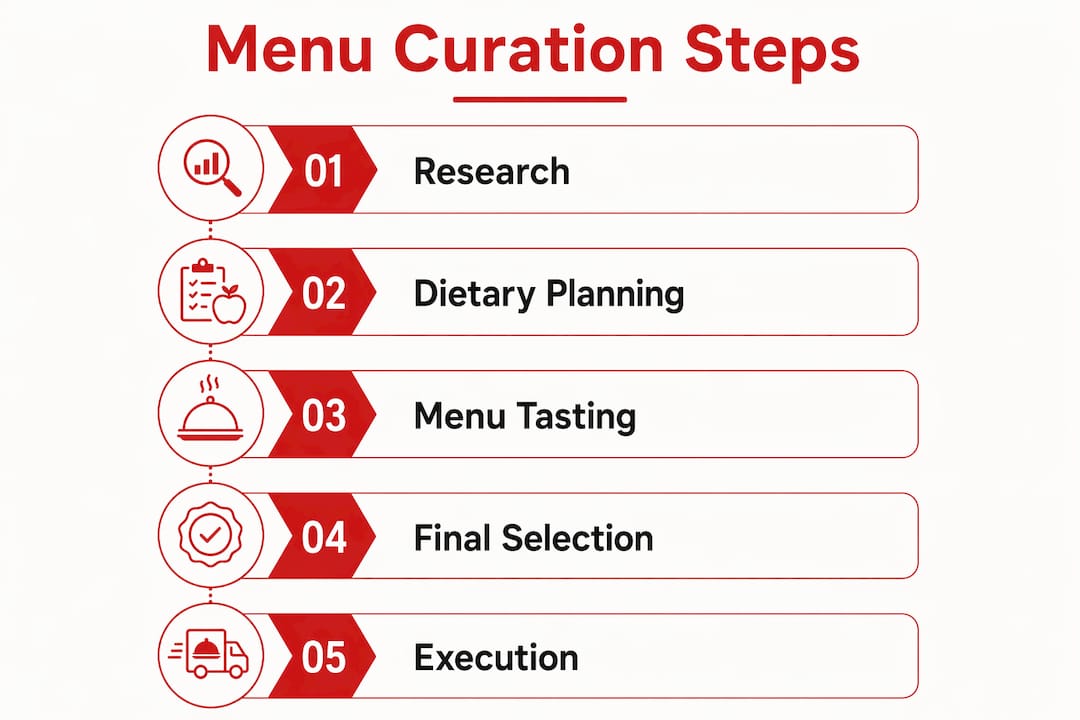
A curated corporate menu is built from the ground up to match the event’s emotional tone, attendee profile, and brand identity. This is a strategic decision, not a luxury add-on. The process starts with a clear brief: who is attending, what is the event trying to achieve, and what impression should the food leave?
The industry term for this discipline is “menu curation,” though event planners also call it corporate menu planning or culinary programming. Both phrases describe the same structured approach. The goal is always the same: every dish on the table should serve the event’s purpose.
Dietary inclusivity is a non-negotiable starting point. Industry best practices recommend that corporate menus include at least 20% vegetarian options, 10% vegan choices, one gluten-free option per 10 guests, and nut-free sections for groups over 30. These are not suggestions. They are the baseline for any professionally curated menu. Ignoring them risks excluding guests and creating a poor impression of the organizing team.
What key factors influence the menu curation process?
Several inputs shape every menu decision, and experienced planners weigh all of them before finalizing a single dish.
- Attendee profile: Age range, cultural backgrounds, and known dietary restrictions define the boundaries of what works. A team with significant South Asian representation, for example, benefits from vegetarian-forward options and clearly labeled spice levels.
- Event type and tone: A formal board dinner calls for plated service and refined courses. A networking lunch works better with stations or grazing tables that keep people moving and talking.
- Budget per head: Corporate catering costs range from $15–$25 per person for typical meetings to $30–$85 for larger events with plated service or multiple stations. Budget shapes not just what you serve but how you serve it.
- Service format: Plated meals signal formality. Buffets and stations encourage interaction. The format must match the event’s social goals.
- Event timing: A 7:30 AM breakfast meeting calls for lighter, energizing food. A post-presentation lunch needs something satisfying without causing afternoon fatigue.
- Dietary restrictions: Vegetarian, vegan, gluten-free, and allergen-free requirements must be mapped before any menu is drafted.
Budget is often where planning breaks down. Planners who lock in a per-head figure early can make smarter trade-offs, choosing, for instance, a smaller number of high-quality dishes over a sprawling buffet that dilutes both quality and focus.
How do menus reflect company values and enhance guest experience?
The best corporate menus do more than feed people. Curated catering has evolved into a branding mechanism that integrates culinary choices into the overall event design. The food tells a story about the organization.
A tech company hosting a product launch might choose bold, globally inspired dishes to signal creativity and ambition. A law firm hosting a client dinner might lean toward classic, precisely executed plates that communicate reliability and attention to detail. Neither choice is accidental. Both reflect deliberate menu design.
Ingredient selection matters as much as dish choice. High-performance foods, those that sustain energy without causing a post-meal slump, keep attendees sharp and engaged. Think grilled proteins, whole grains, fresh vegetables, and light sauces rather than heavy cream-based dishes or fried foods. Visual presentation reinforces branding through serving ware, table settings, and the alignment of food aesthetics with event theme.
Interactive elements add another layer of engagement. Food stations where guests can customize their plates, artisanal comfort food bars, or chef-attended carving stations create conversation and make the meal memorable. These formats also reduce service bottlenecks at large events.
- Interactive stations: Build-your-own bowls, taco bars, or cheese boards give guests agency and encourage mingling.
- Artisanal comfort food: Elevated versions of familiar dishes, like gourmet sliders or handmade pasta, balance approachability with quality.
- Themed presentations: Serving ware, garnishes, and plating that echo the event’s visual identity reinforce the brand without a single word.
- Clean ingredient focus: Avoiding heavy, processed foods keeps energy levels steady through afternoon sessions.
Pro Tip: When designing a menu for a half-day conference, cap the lunch portion at three main choices with two sides. Offering more than four main courses creates decision fatigue and slows service. Simplicity reads as confidence, not limitation.
What operational practices ensure successful menu execution?
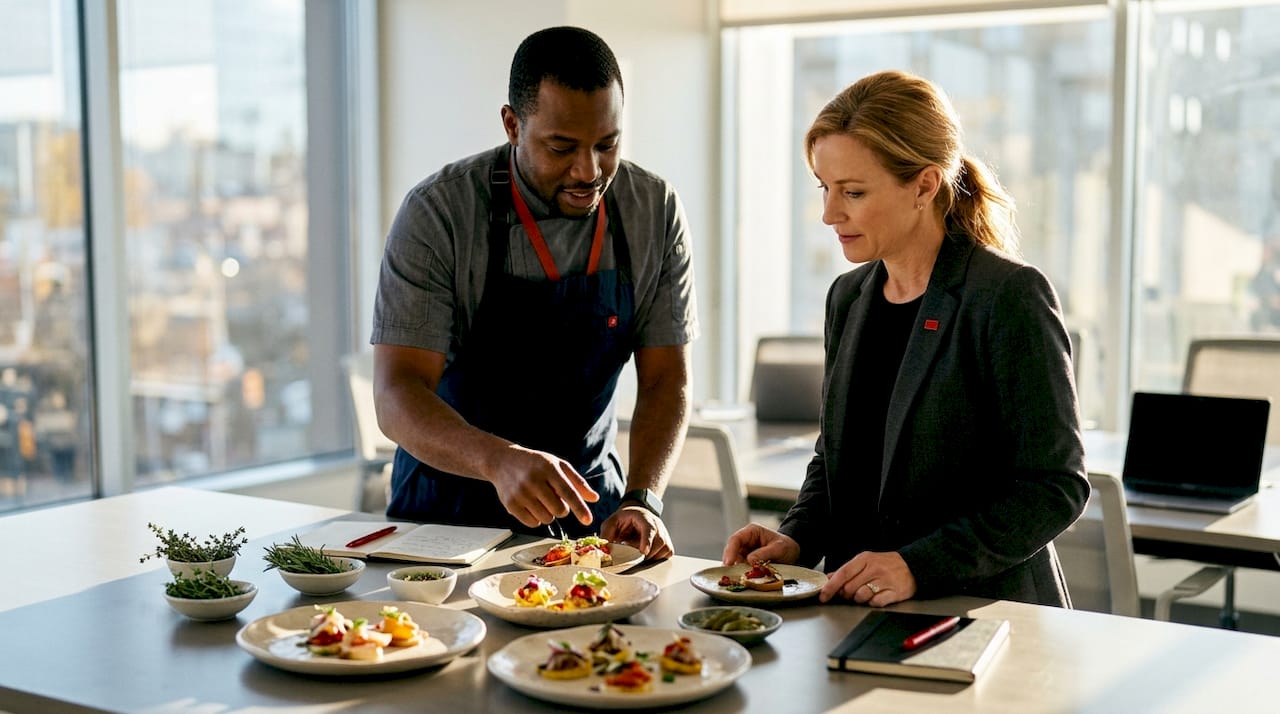
A well-designed menu fails without equally strong execution. Operational testing is the step most planners underestimate. Dishes must be tested under conditions that mirror the actual event environment, not just in a professional kitchen.
- Conduct pre-event tastings. Taste every dish in its final form, including any modifications for dietary needs. A gluten-free version of a dish should taste as good as the original.
- Assess venue kitchen capability. Not every event space has a full commercial kitchen. Planners must confirm what equipment is available and adapt the menu accordingly. A dish requiring a high-heat wok station cannot be executed in a venue with only convection ovens.
- Build feedback loops. Culinary teams and event planners should review the menu together at least twice before the event. Each review should address portion sizes, service timing, and allergen labeling.
- Plan for scale. A dish that works for 20 people may not hold quality at 200. Meticulous testing in development conditions is necessary to confirm that dishes maintain consistency at volume.
- Identify common pitfalls. Late deliveries, incorrect temperature holding, and unlabeled allergens are the three most common execution failures. Each requires a written contingency plan before the event date.
Pro Tip: Always request a written kitchen capability checklist from the venue at least three weeks before the event. Discovering on the day that there is no refrigeration for cold platters is a crisis that a single email could have prevented.
For planners working with external caterers, a resource like this complete event catering guide provides a useful framework for aligning expectations between the planning team and the culinary provider.
How can planners incorporate trends and innovation in menu curation?
Menu innovation in corporate catering is increasingly driven from the ground up. Local chefs and test kitchen experimentation now lead trend adoption, replacing the old model of rigid, top-down menu decisions. This shift produces menus that feel current and authentic rather than generic.
- Hyper-local sourcing: Featuring ingredients from regional producers connects the menu to a sense of place. It also supports sustainability goals and gives caterers a genuine story to tell guests.
- Sustainability and waste reduction: Forward-thinking planners specify nose-to-tail or root-to-stem cooking approaches, reducing food waste while demonstrating environmental awareness.
- Technology-assisted collaboration: Video calls between event planners and remote chefs, shared digital mood boards, and real-time menu feedback tools have replaced the old fax-and-phone model of menu development.
- Flexible formats: Pop-up stations and mobile kitchen setups allow menus to adapt to unconventional venues, outdoor spaces, or multi-room event layouts.
- Attendee engagement through food: Cooking demonstrations, ingredient storytelling cards at each table, and chef Q&A moments turn the meal into an experience rather than a break.
Menu innovation driven by local chefs increases both creativity and relevance. Planners who build relationships with local culinary talent gain access to seasonal ingredients and ideas that no centralized catering catalog can replicate. For events where beverages are part of the experience, pairing curated food with thoughtfully chosen cocktails adds another dimension to the overall guest experience.
Key Takeaways
Effective corporate menu curation requires matching every food decision to the event’s purpose, attendee profile, dietary requirements, and brand identity.
| Point | Details |
|---|---|
| Start with dietary baselines | Apply the 20% vegetarian, 10% vegan, and one gluten-free per 10 guests standard before building any menu. |
| Budget shapes format | Costs range from $15–$25 per person for meetings to $30–$85 for plated events; set the budget before selecting dishes. |
| Menus signal brand values | Food choices, presentation, and service style communicate organizational culture as clearly as any visual branding. |
| Test before the event | Conduct tastings and venue kitchen assessments at least three weeks out to catch execution problems early. |
| Local sourcing drives innovation | Partnering with regional chefs and producers produces menus that feel current, authentic, and memorable. |
What I’ve learned about menu curation that most guides skip
Most articles on corporate menu planning treat food as a logistics problem. Get the dietary boxes checked, stay on budget, and call it done. That framing misses the real opportunity.
The shift I have seen over years of working with corporate events is from transactional catering to culinary storytelling. The organizations that get this right treat the menu as part of the event’s creative brief, not an afterthought. They brief the caterer the same way they brief a designer: here is the audience, here is the message, here is the feeling we want people to leave with.
The most common misconception I encounter is that dietary accommodation means compromise. It does not. A menu built around clean, high-quality ingredients that happen to be vegetarian-forward and allergen-aware is often a better meal than one built around heavy proteins with a few salads added as an afterthought. The constraint forces better cooking.
My honest advice: involve your caterer in the event brief, not just the food order. When a culinary team understands the event’s purpose and the attendee profile, they make better decisions at every level, from ingredient sourcing to plating. That collaboration is where the real quality comes from. Planners who treat catering as a vendor transaction rather than a creative partnership consistently get less impressive results. The right catering partner changes the entire outcome.
— Efe
How Theofficelunch supports corporate menu planning
Theofficelunch has been delivering professionally curated office catering in London since 2015, with a service model built specifically for corporate events and workplace gatherings.

Every order covers dietary requirements across vegetarian, vegan, and gluten-free options, with fresh sandwich platters and varied meal formats that suit meetings, seminars, and larger office events. The ordering process is designed to reduce administrative work for event planners and HR teams, with reliable delivery at the correct temperature and flexible menu customization. Whether you are planning a board lunch for 12 or a company-wide celebration for 150, Theofficelunch matches the menu to your event’s scale, budget, and dietary needs without the back-and-forth that slows most catering decisions down.
FAQ
What is corporate menu curation?
Corporate menu curation is the process of designing meal selections to align with an event’s purpose, attendee demographics, dietary requirements, and organizational values. It treats food as a strategic element of the event rather than a logistical necessity.
How many dietary options should a corporate menu include?
Industry best practices recommend at least 20% vegetarian options, 10% vegan choices, one gluten-free option per 10 guests, and nut-free sections for groups over 30 attendees.
How much does corporate catering cost per person?
Corporate catering costs range from $15–$25 per person for typical meetings to $30–$85 per person for larger events with plated service or multiple food stations.
How far in advance should corporate menu planning begin?
Menu planning should begin at least three to four weeks before the event to allow time for tastings, venue kitchen assessments, dietary confirmation, and supplier coordination.
What is the difference between plated service and food stations?
Plated service delivers individual courses to seated guests and signals formality. Food stations allow guests to serve themselves, encourage movement and conversation, and work better for networking-style events.
Recommended
- How to Choose Catering for Company Gatherings – Sandwich platters – Office Lunch – Catering company-Party food
- How Catering Supports Business Celebrations That Work – Sandwich platters – Office Lunch – Catering company-Party food
- Corporate lunch delivery London – Sandwich platters – Office Lunch – Catering company-Party food
- Catering company – Sandwich platters – Office Lunch – Catering company-Party food