

How meeting catering is organized: the key steps
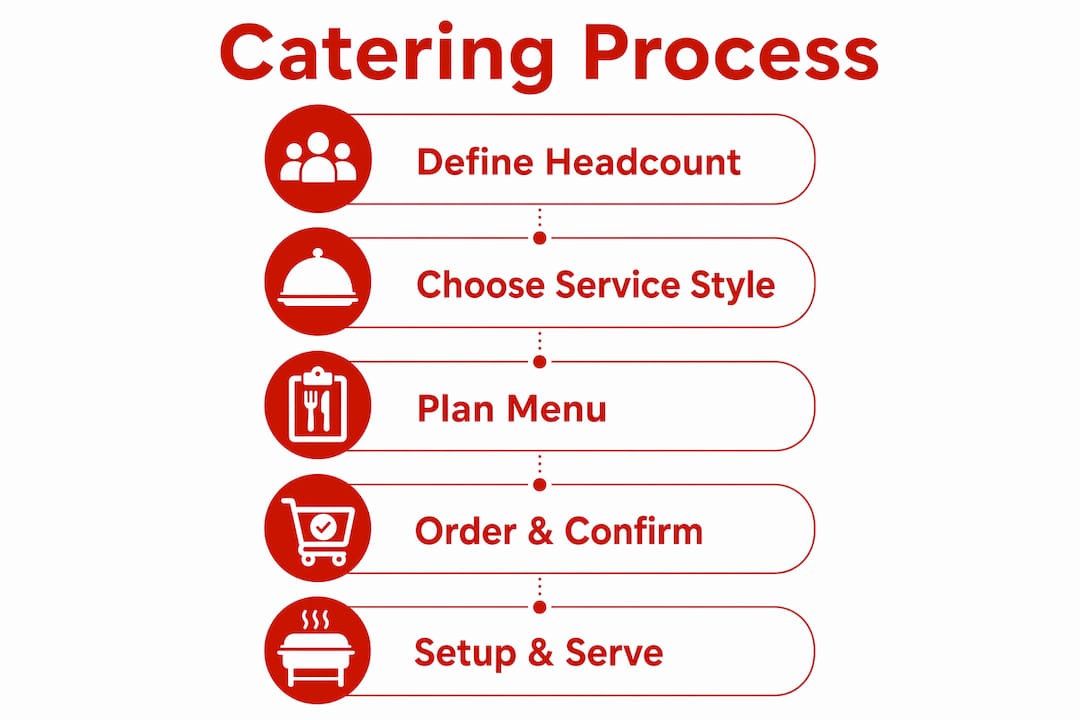
Getting meeting catering right starts before you ever contact a caterer. Define the meeting type and headcount first, because a 12-person board review and a 200-person all-hands call for completely different service styles, quantities, and logistics. Once you know those two facts, everything else follows.
Here is the core process at a glance:
- Confirm headcount and meeting format. RSVPs give you a baseline, but always build in a buffer for last-minute additions.
- Set your budget. Per-person cost varies widely by service style, so lock this down before you start comparing menus.
- Collect dietary requirements. Send a pre-event survey or include a dietary field in your calendar invite. Vegan, gluten-free, nut-free, and dairy-free requests need dedicated portions, not afterthoughts.
- Choose your service style. Boxed lunches, buffets, and action stations each serve a different meeting dynamic. Pick the one that fits your agenda, not just your taste.
- Plan delivery timing and setup. Coordinate arrival windows with your venue access and the meeting schedule so food is ready before attendees are hungry.
- Confirm details with your caterer at least two weeks out. Last-minute changes cost money and create errors.
That sequence is the backbone of how meeting room catering works in practice. The sections below break each stage into the specifics that actually matter.
How to plan the right menu for your meeting
Service style is the first real decision, and it shapes everything downstream. Boxed lunches work best for working meetings where time is tight and participants need to eat while the agenda keeps moving. Buffets and action stations, on the other hand, encourage conversation and work well for networking events or all-hands gatherings where the social dynamic matters.
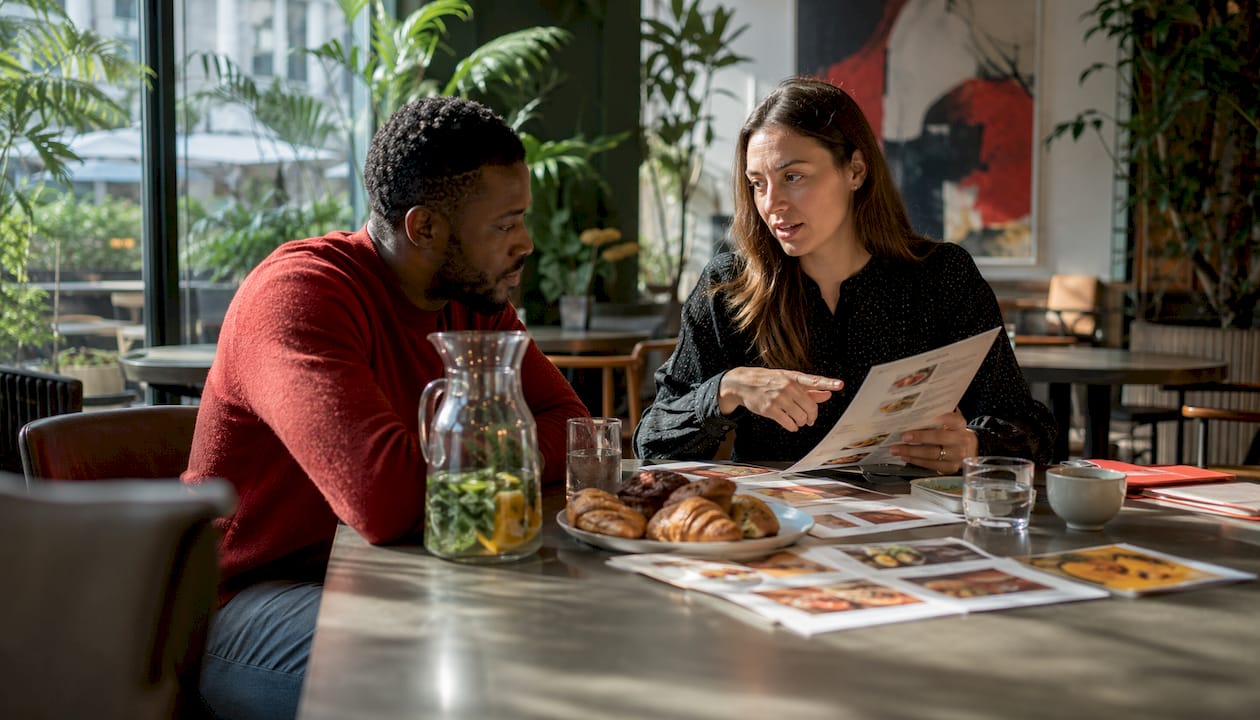
For all-day meetings, think in energy blocks rather than single meals. A light, protein-rich breakfast prevents the mid-morning slump. A substantial lunch around midday keeps focus intact. By 2:00 PM, a snack break with protein and healthy grains does more for productivity than any afternoon speaker slot.
Dietary inclusivity is not optional. Common requirements include:
- Gluten-free and vegan options with dedicated serving utensils to prevent cross-contamination
- Nut-free items clearly labeled, especially in office environments where allergies can be severe
- Dairy-free and vegetarian selections as standard, not special requests
- Individually marked packaging for attendees with multiple restrictions, so they can identify their meal without asking staff
Seasonal ingredients tend to improve both quality and cost. A corporate menu curated around what is fresh in a given month will almost always outperform one built on year-round staples.
Pro Tip: Keep the menu to five or six items maximum for buffet-style service. More choices slow the line and increase waste. A focused menu moves faster and photographs better.
Managing logistics and food service flow during meetings
Good logistics mean attendees get food quickly, move through the space without congestion, and return to the meeting without a 20-minute delay. Poor logistics mean the opposite, and it is usually visible within the first five minutes of service.
Follow this sequence for smooth execution:
- Map the room before you place a single table. Identify natural traffic paths, entry and exit points, and where people will naturally drift during a break. Food stations belong in those natural drift zones, not against a wall that creates a dead end.
- Designate a specific service area. A centralized buffet table or cluster of stations gives attendees a clear destination and prevents the scattered, chaotic feel of food spread across multiple surfaces.
- Duplicate stations past 80 guests. One self-serve station for a crowd that size will bottleneck regardless of how fast the food is. Two identical stations cut wait times and distribute density across the room.
- Use clear, minimal signage. Acrylic sign holders with clean typography identify each dish, flag allergens, and keep guests moving. Decorative script fonts and overstyled frames slow people down because they have to lean in to read them.
- Separate restocking from guest pathways. Replenishing food directly in front of guests creates congestion and looks disorganized. A rolling utility cart lets staff restock from the side without interrupting flow.
- Place waste bins just beyond the station exit. Guests should never have to search for disposal, but bins positioned inside the station itself create visual clutter and slow movement.
Additional logistics to address before the event:
- Confirm delivery access: loading dock hours, elevator availability, and parking for catering vehicles
- Agree on a setup window with your caterer, typically 45–60 minutes before service begins
- Assign a point of contact on-site who can make real-time decisions if something changes
Planning catering weeks in advance and booking the meeting space concurrently reduces last-minute complications. When room booking and catering orders are handled together, timing conflicts between setup and the meeting schedule almost disappear.
Common catering mistakes that disrupt meetings
Most catering failures are not about food quality. They are about timing, communication, and layout decisions made too late or not at all.
- Overcomplicating the menu. Too many options feel generous in theory. In practice, they slow the line, increase the chance of cross-contamination, and make labeling harder. Menu complexity and poor timing are the two most common reasons meeting catering disrupts the agenda rather than supporting it.
- Ignoring dietary restrictions. One attendee who cannot eat anything on the table will remember that meeting for the wrong reason. Collect requirements in advance, every time.
- Misaligning food service with the agenda. Opening a buffet during an active presentation pulls attention and creates noise. Service should open during a scheduled break, not whenever the food arrives.
- Restocking in guest pathways. Catering staff moving through a crowd with full trays creates congestion and signals a lack of planning. Restocking routes should be mapped before the event, not improvised during it.
- Failing to confirm quantities. Accurately estimating food quantities requires factoring in RSVP numbers, meeting duration, and service style. Ordering for confirmed headcount without a buffer regularly results in shortages, especially when meetings run long.
- No clear communication with the caterer on the day. Designate one person as the caterer’s contact. When everyone is responsible, no one is.
What professional office lunch delivery services do differently
The gap between adequate catering and genuinely professional catering usually comes down to presentation and operational discipline, not the food itself.
Visual uniformity in serving ware and linens signals competence before a guest takes a single bite. Matching trays, neutral table runners, and consistent serving pieces create a sense of calm structure that guides guests intuitively through the station. When everything looks deliberate, guests move confidently. When it looks assembled from whatever was available, they hesitate.
Professional services also treat food stations as transition devices within the event arc, not just as places to eat. A well-positioned station during a natural break between a keynote and a networking block gives guests something to do while the room resets. It prevents the awkward standing moment that happens when a session ends and no one knows where to go next.
The food station isn’t just a place to eat. It’s part of the event’s operational flow. When done well, it supports networking and movement. When done poorly, it creates hesitation, lines, and subtle stress. Often, it’s not the food that determines success — it’s the layout supporting it.
Theofficelunch has built its service model around exactly this kind of operational thinking. Fresh sandwich platters for office meetings arrive at the correct temperature, labeled for dietary needs, and timed to the meeting schedule rather than to a generic delivery window. The goal is to reduce administrative overhead for office managers while keeping the catering experience professional from arrival to cleanup.
How to budget for meeting catering
Budget planning works best when you anchor it to per-person cost by service style. Boxed lunches typically run an affordable per-person price and suit small meetings or conferences with a tight lunch window. A standard buffet is priced to suit team lunches and casual gatherings. Executive buffets for board meetings or client presentations are priced at the higher end to reflect elevated quality and service. Action stations for networking events or holiday parties start at a premium price point reflecting their interactive nature.
A few ways to manage costs without cutting quality:
- Choose seasonal menus. Ingredients in season cost less and taste better. Ask your caterer what is fresh for the month you are ordering.
- Negotiate volume contracts. If your organization spends regularly on catering, volume pricing is worth discussing directly with your provider.
- Match service style to meeting purpose. A working lunch does not need an executive buffet. Spending more than the meeting warrants does not impress attendees; it just wastes budget.
For a deeper breakdown of how to structure your catering spend, Theofficelunch’s guide on setting a catering budget covers the full cost framework for business events.
How to select and evaluate catering service providers
The right caterer for a 15-person team lunch is not necessarily the right caterer for a 300-person conference. Evaluate providers against the specific demands of your event, not their general reputation.
Ask these questions before you commit:
- Can they accommodate your full list of dietary requirements, including cross-contamination protocols?
- What is their delivery and setup process, and how do they handle access restrictions at your venue?
- Do they provide serving equipment, or do you need to source it separately?
- What is their policy on last-minute headcount changes?
- Can they provide references from events of similar size and format?
A provider who cannot clearly answer the cross-contamination question is a risk regardless of how good their menu looks. The FDA Food Code sets the standard for safe food handling at events, and any professional caterer should be able to speak to those practices directly.
For guidance on choosing a corporate caterer, Theofficelunch covers the evaluation criteria that matter most for office and workplace events.
How to align catering timing with your meeting agenda
Timing is where most well-planned catering falls apart. Food that arrives 20 minutes late, or opens during a presentation, disrupts the meeting in ways that are hard to recover from.
Build your catering timeline backward from the meeting agenda:
- Identify every natural break in the agenda. These are your service windows. Food should be ready and accessible at the start of each break, not arriving during it.
- Add a 45-minute setup buffer before the first service. Caterers need time to arrange stations, check temperatures, and place signage before guests arrive.
- For all-day meetings, schedule a mid-morning snack break. A 15-minute break at around 10:30 AM keeps energy up and gives attendees a reason to move before the lunch push.
- Confirm the caterer’s arrival time in writing. Verbal agreements on timing are the single most common source of catering delays.
- Build a 10-minute buffer into every service window. Meetings run long. If lunch is scheduled at noon and the meeting is still going at 12:10 PM, the food should still be at the right temperature and the station should still look fresh.
A corporate event catering timeline built around your specific agenda is the most reliable way to prevent timing conflicts. The more precisely the catering schedule mirrors the meeting schedule, the less visible the logistics become to attendees.
Key Takeaways
Effective meeting catering depends on defining headcount and service style early, then aligning every logistics and timing decision to the meeting agenda.
| Point | Details |
|---|---|
| Start with headcount and format | Define meeting type and expected attendance before selecting menu or service style. |
| Match service style to meeting purpose | Boxed lunches suit working sessions; buffets and action stations work for networking events. |
| Duplicate stations for large groups | Past 80 guests, one self-serve station creates bottlenecks regardless of service speed. |
| Align food service with agenda breaks | Open catering during scheduled breaks only; service during active programming disrupts the meeting. |
| Budget by service style | Per-person costs vary widely depending on the service style and menu choices; boxed lunches are generally more affordable and suitable for small or time-pressed meetings, while action stations are typically a premium option for larger or special events. Consult your caterer for current pricing. |
Recommended
- Catering Brief for Corporate Events: 2026 Guide – Sandwich platters – Office Lunch – Catering company-Party food
- Catering Checklist Guide for Event Planners in 2026 – Sandwich platters – Office Lunch – Catering company-Party food
- Large Meeting Catering Delivery Options: A Planner’s Guide – Sandwich platters – Office Lunch – Catering company-Party food
- Corporate Event Catering Timeline Guide for Planners – Sandwich platters – Office Lunch – Catering company-Party food