

Corporate gathering catering is the planned provision of food and beverage services designed to support meetings, team events, and client functions within a professional setting. The right catering choice does more than feed people. It signals how much leadership values its team, shapes the energy in the room, and directly affects how productive the event becomes. Corporate catering costs range from $15 to $85 per person depending on service style, which means the decision carries real budget weight. Knowing how to choose catering for company gatherings before you contact a single vendor saves time, money, and the kind of logistical chaos that derails otherwise well-planned events.
What are the main types of company gathering catering options?
The four primary service styles in corporate catering are boxed lunches, buffet service, plated meals, and interactive food stations. Each one fits a different event size, formality level, and goal. Choosing the wrong style creates friction, not connection.
Boxed lunches
Boxed lunches minimize downtime and work best for working sessions where attendees stay at their seats. Each person gets an individual, pre-portioned meal, which removes the time lost to a serving line. This format suits training days, board briefings, and any meeting where the agenda runs tight.
Buffet service
Buffet service works best for groups of 20 or more. It encourages movement, conversation, and informal networking in a way that seated formats cannot. The tradeoff is that buffets require more physical space and some internal coordination to keep the flow moving.

Plated service
Plated meals signal formality. They work for executive offsites, client dinners, and award events where presentation matters as much as the food itself. This format requires full-service staffing, which adds cost but removes all setup burden from your internal team.
Interactive food stations
Food stations let attendees build their own plates, which naturally accommodates dietary restrictions without singling anyone out. A taco bar, grain bowl station, or mezze spread gives people agency and keeps energy high during longer events.
The drop-off vs. full-service decision matters as much as the menu. Drop-off catering places setup and cleanup responsibility on your internal team. Full-service providers manage everything from arrival to cleanup, acting as an extension of your event staff. Full-service is the right call for client-facing events or gatherings above 50 people.
Pro Tip: Book full-service catering at least 4–6 weeks ahead. Last-minute requests limit your menu options and reduce the caterer’s ability to accommodate dietary needs.
- Boxed lunches: best for working sessions and tight agendas
- Buffet: best for 20+ guests and networking goals
- Plated service: best for formal, client-facing, or executive events
- Food stations: best for dietary diversity and longer events
- Drop-off: lower cost, requires internal management
- Full-service: higher cost, zero internal burden
How does catering reflect company culture and event goals?
Catering quality signals leadership values and directly affects how employees and clients perceive an organization. A poorly planned spread at a client pitch communicates carelessness. A thoughtful, well-timed meal at a team offsite communicates that leadership takes its people seriously. The food is never just food.
Research cited by Fooda confirms that shared lunches among colleagues improve trust, openness, and creativity. That finding reframes catering from a line item into a culture-building tool. When you feed people well together, you get better collaboration out of them.
Aligning your menu with your company’s identity takes deliberate thought. A tech startup with a casual, global team reads differently than a financial services firm hosting a client review. The former might benefit from a diverse street-food station. The latter calls for a clean, plated lunch with premium ingredients.
Avoiding a one-size-fits-all catering order is the single most effective way to signal that your organization pays attention to its people. A menu that reflects your team’s actual dietary needs and preferences builds more goodwill than any team-building exercise.
Follow these steps to align catering with your event goals:
- Define the event purpose first. A celebration calls for abundance. A working lunch calls for speed and simplicity.
- Map your attendee demographics. Age range, cultural backgrounds, and known dietary restrictions all shape the right menu.
- Match presentation to brand tone. Casual events get casual formats. Formal events get formal ones. Mismatches feel off to attendees even when they cannot name why.
- Build in dietary accommodation from the start. Vegan, gluten-free, halal, and kosher options should be defaults, not afterthoughts.
- Use food to set the pace. A light breakfast keeps energy focused. A heavy buffet mid-afternoon kills momentum. Plan with the agenda in mind.
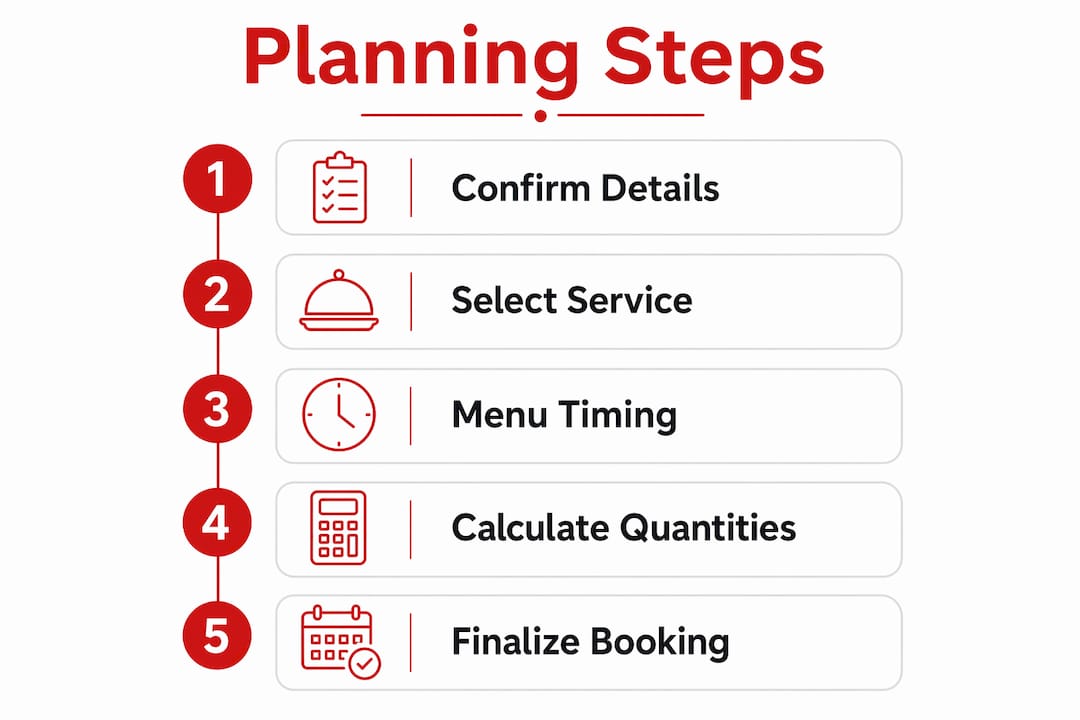
What planning steps should decision-makers follow for event catering?
Effective corporate catering planning follows a clear sequence. Skipping steps creates gaps that show up on the day of the event, not before.
Step 1: Lock in your event details first
Before you contact any caterer, confirm your date, headcount, venue, and start time. Early contact with caterers including these details secures availability and gives the provider time to customize your order. Caterers who receive incomplete briefs deliver generic results.
Step 2: Choose your service style
Match the service style to your event’s formality and your team’s capacity. If no one on your team can manage setup and cleanup, drop-off catering is the wrong choice regardless of cost. Full-service providers handle logistics end to end, which is worth the premium for high-stakes events.
Step 3: Plan your menu around the time of day
Portion sizes depend on meeting start time. Early breakfasts require larger servings because attendees arrive hungry. Mid-morning meetings need lighter options. Lunch events carry the heaviest portion expectations. Getting this wrong means attendees are either distracted by hunger or too full to focus.
For office breakfast catering, prioritize protein-forward options and avoid heavy pastries that cause an energy crash before 10:00 AM.
Step 4: Calculate quantities accurately
Plan for one main dish, two sides, and two drinks per person for standard corporate events. For buffets, budget 0.5–1 pound of food per guest. Under-ordering creates visible shortages that embarrass the organizer. Over-ordering wastes budget. A precise quantity plan eliminates both problems.
| Event type | Recommended service style | Booking lead time |
|---|---|---|
| Working lunch (under 20 people) | Boxed lunches or drop-off | 1–2 weeks |
| Team offsite (20–50 people) | Buffet or food stations | 2–4 weeks |
| Client event or executive meeting | Plated or full-service | 4–6 weeks |
| Large company gathering (50+) | Full-service with stations | 6+ weeks |
Pro Tip: Ask your caterer for a timed delivery window, not just a delivery date. A meal that arrives 30 minutes early goes cold. One that arrives 10 minutes late disrupts your agenda.
What mistakes should you avoid when selecting event catering?
The most common catering mistakes are avoidable with basic planning discipline. Knowing them in advance is the fastest way to protect your event.
- Confusing drop-off with full-service. Drop-off catering arrives at your door. Your team handles everything after that. If you have no one assigned to setup, serving, and cleanup, you need a full-service provider.
- Ignoring the meeting schedule. Customized menus tailored to time of day and event objectives prevent food from becoming a distraction. A heavy meal before a two-hour strategy session kills focus.
- Overlooking dietary diversity. A menu with no vegetarian, gluten-free, or allergen-aware options forces some attendees to go without. That exclusion is noticed and remembered.
- Failing to plan food flow. For buffets and stations, the physical layout of the food affects how quickly people move through the line. A poorly positioned station creates a bottleneck that eats into agenda time.
- Ordering without a quantity formula. Guessing portion sizes leads to either shortages or waste. Use the one main, two sides, two drinks formula as your baseline and adjust for event duration.
Pro Tip: Always collect dietary restrictions at registration, not the day before the event. Last-minute requests are harder to accommodate and increase the risk of errors.
For time-sensitive office lunches, pre-portioned formats with clearly labeled ingredients solve both the timing and the dietary transparency problem in one step.
Key Takeaways
Choosing catering for company gatherings requires matching service style, menu, and timing to your event’s specific goals, headcount, and attendee needs.
| Point | Details |
|---|---|
| Service style drives logistics | Choose drop-off for small internal events and full-service for client-facing or large gatherings. |
| Catering reflects leadership values | Poor food quality at corporate events damages brand perception and employee morale. |
| Plan quantities with a formula | One main, two sides, and two drinks per person prevents shortages and reduces waste. |
| Timing affects portion size | Early breakfasts need larger servings; mid-morning and afternoon events need lighter options. |
| Dietary inclusion is non-negotiable | Collect restrictions at registration and build vegan, gluten-free, and allergen-aware options into every menu. |
Why I think most companies get catering backwards
Most decision-makers treat catering as the last item on the event planning checklist. They lock in the venue, the agenda, and the speakers, then call a caterer two weeks out and order whatever is available. That sequence is backwards, and it shows in the results.
I have watched well-organized conferences fall flat because the food arrived late, ran out before half the room was served, or offered nothing for the third of the room with dietary restrictions. The agenda was sharp. The speakers were prepared. But the energy in the room never recovered after a chaotic lunch break.
The companies that get catering right treat it as part of the event design, not a support function. They decide on the service style when they book the venue. They collect dietary information when they send the invitations. They brief the caterer with the same detail they give the AV team.
Food builds trust and creativity in ways that no agenda item can replicate. A well-fed room is a more engaged room. That is not a soft claim. It is a documented outcome that most event planners still treat as a nice-to-have.
The practical shift is simple: put catering on the planning timeline at the same level as the venue. Everything else follows from there.
— Efe
Theofficelunch: corporate catering built for London and Surrey
Theofficelunch has delivered professional office catering across London and Surrey since 2015, with a focus on fresh sandwich platters, diverse meal options, and reliable timing that keeps meetings on schedule.

Their office catering service covers everything from working lunches and team meetings to larger company gatherings, with menus built to accommodate dietary needs without extra administrative effort. Orders are placed online, delivery is timed to your agenda, and meals arrive at the correct temperature. For teams that need quality food without the overhead of managing a caterer, Theofficelunch removes the friction. Browse their full catering menu to find the right fit for your next event.
FAQ
What is corporate gathering catering?
Corporate gathering catering is the planned delivery of food and beverage services for professional events including meetings, offsites, and client functions. It covers everything from drop-off boxed lunches to full-service plated meals.
How much does catering for a company event cost?
Corporate catering costs range from $15 to $25 per person for informal drop-off service and $30 to $85 per person for plated or specialized station formats, depending on menu and location.
How early should I book catering for a company gathering?
Full-service catering requires booking 4–6 weeks in advance for complex events. Drop-off catering for smaller internal meetings can typically be arranged within 1–2 weeks.
How does catering improve company gatherings?
Shared meals improve trust, openness, and creativity among colleagues, making catering a direct contributor to team performance and company culture, not just a logistical necessity.
What is the best catering format for a large company event?
Full-service catering with buffet or interactive food stations works best for gatherings above 50 people. This format manages food flow, accommodates dietary diversity, and removes all setup and cleanup burden from internal teams.
Recommended
- Catering company – Sandwich platters – Office Lunch – Catering company-Party food
- Office breakfast catering London – Sandwich platters – Office Lunch – Catering company-Party food
- Office catering London – Sandwich platters – Office Lunch – Catering company-Party food
- Party platters delivered to your door – Sandwich platters – Office Lunch – Catering company-Party food