

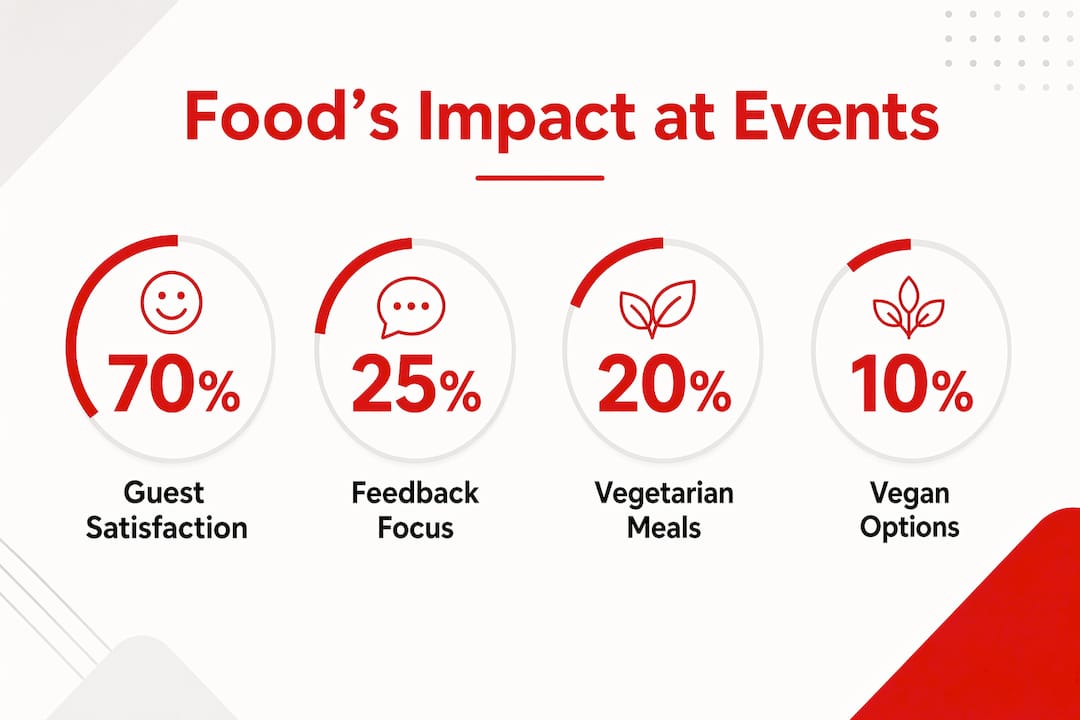
Food is defined as the single most discussed element in post-event feedback, with 25% of respondents reporting it accounts for more than half of all post-event comments. The role of food in company events extends well beyond nutrition. It shapes first impressions, signals organizational values, and directly controls how engaged attendees feel throughout the day. Planners who treat catering as an afterthought consistently underdeliver. Those who treat it as a strategic asset consistently outperform expectations.
How does food quality and presentation affect corporate events?
Over 70% of event planners rank food quality and presentation as the top drivers of overall guest satisfaction. That figure is not surprising once you consider what food communicates before a single bite is taken. Plating style, ingredient choices, and visual arrangement all tell attendees how much the host organization values their time and comfort.
Food presentation acts as a brand statement, communicating company culture through every detail from the garnish on a platter to the sourcing of ingredients. A company that serves locally sourced, plant-forward dishes signals environmental awareness and employee wellness. A company that defaults to generic boxed lunches signals the opposite.
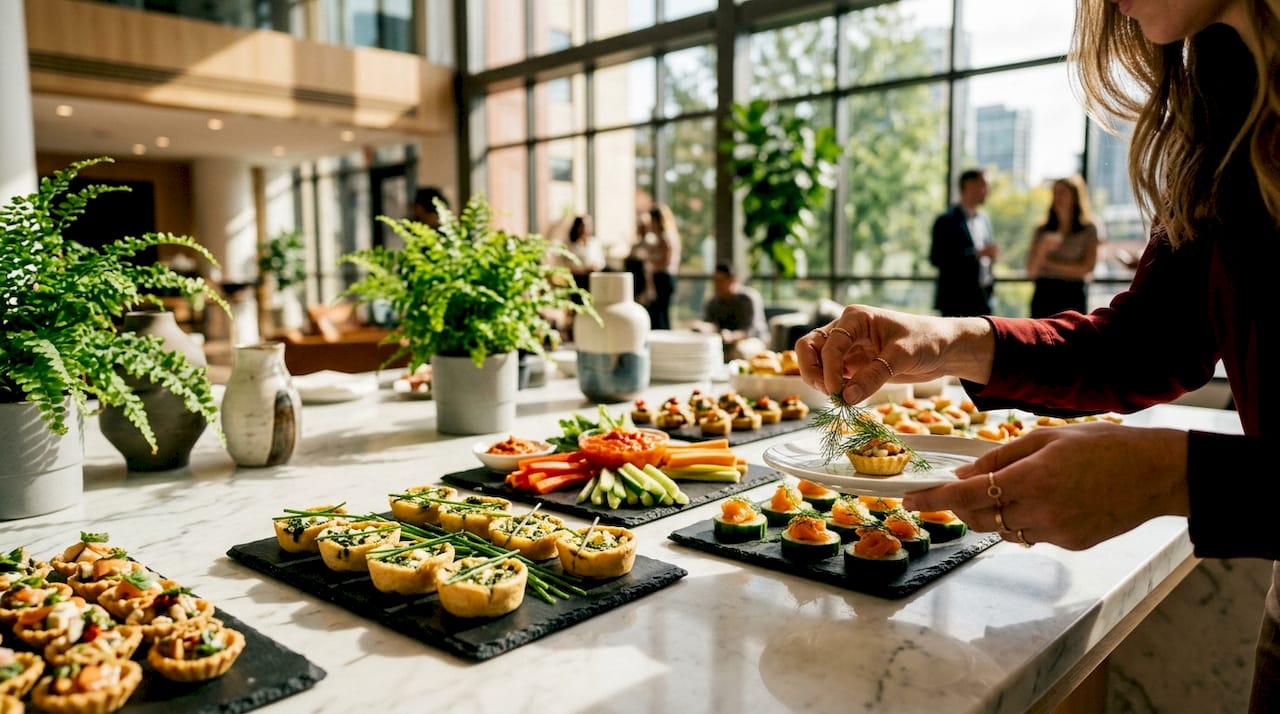
Sustainability is no longer a niche preference in corporate food selection. Plant-forward menus, smaller portion sizes, and reduced single-use packaging now appear on the checklist for most mid-to-large corporate gatherings. These choices attract positive attendee responses and align with the values many organizations publicly promote.
The visual and sensory appeal of food also controls the atmosphere of a room. Colorful, well-arranged platters create energy. Dull, monochrome spreads flatten it. Event planners who invest in presentation as much as taste consistently report stronger post-event sentiment.
- Use seasonal ingredients to keep menus fresh and visually interesting.
- Choose platters and serving vessels that match the event’s tone, formal or relaxed.
- Avoid overcrowding serving stations. Sparse, well-spaced arrangements look more intentional.
- Confirm plating standards with your caterer during the tasting, not on the day.
Pro Tip: Request a visual mock-up or photo of the intended plating from your caterer at least one week before the event. What sounds appealing on paper often looks different in practice.
How should planners manage dietary diversity at corporate events?
Inclusive menus are not optional for corporate events. Industry best practice sets the benchmark at 20% vegetarian, 10% vegan, and at least one gluten-free option per 10 guests. For groups exceeding 30 people, a dedicated nut-free section is mandatory. These standards exist because dietary exclusion is one of the fastest ways to make an attendee feel unwelcome.
The most common mistake planners make is treating dietary accommodations as a last-minute add-on. Dietary surveys conducted 2–3 weeks before an event allow caterers to integrate special meals without creating a visible, stigmatizing separation between “regular” food and “special” food. When everyone’s needs are woven into the main menu, the event feels cohesive rather than patched together.
Here is a practical process for managing dietary diversity effectively:
- Send a dietary preference survey to all confirmed attendees at least three weeks before the event.
- Categorize responses by restriction type: vegetarian, vegan, gluten-free, nut allergy, dairy-free, and other.
- Share the full breakdown with your caterer immediately, not piecemeal as responses arrive.
- Confirm that special meals are labeled clearly but discreetly at the serving station.
- Build a 10% buffer into every dietary category to account for late registrations or undisclosed needs.
How you curate corporate menus for dietary diversity also shapes your company’s image. Attendees notice when their needs are anticipated rather than accommodated reluctantly.
Pro Tip: Label every dish with its dietary attributes using small, clear cards at the serving station. This removes the need for guests to ask questions, which speeds up service and reduces social awkwardness.
How does catering format affect event flow and networking?
Food formats act as social architecture, directing guest movement, controlling conversation clusters, and setting the pace of the entire event. A plated dinner keeps people seated and focused. A station setup encourages movement and spontaneous interaction. Finger food passed by staff creates energy and keeps conversations fluid. The format you choose should match the event’s primary goal.
Poor micro-logistics such as a single coffee station placed at the room’s entrance create bottlenecks that disrupt session schedules and frustrate attendees. Distributing refreshment points across a venue, or timing their availability to coincide with natural breaks, keeps traffic moving and prevents the kind of crowding that kills momentum.
| Format | Best for | Key benefit |
|---|---|---|
| Passed appetizers | Cocktail receptions, networking hours | Keeps guests mobile and conversations open |
| Interactive stations | Team events, product launches | Encourages movement and spontaneous interaction |
| Buffet | Multi-session conferences | Flexible timing, accommodates varied schedules |
| Plated dinner | Award ceremonies, formal dinners | Controls pacing and creates a structured experience |
Food timing and type also manage attendee energy across a full-day program. A heavy lunch before an afternoon keynote produces the post-meal slump that every planner dreads. Lighter, protein-rich options at midday, paired with strategically placed snack stations in the late afternoon, sustain focus without the crash. The best snacks for company meetings in the afternoon slot are those high in protein and low in refined sugar: nuts, cheese portions, and whole-grain options.
Pro Tip: Place at least two beverage stations on opposite sides of any room holding more than 50 people. One station always creates a queue. Two stations create flow.
How much of the event budget should go to food?
Food represents more than 40% of the total event budget for the majority of corporate event planners. That figure reflects not just food costs but also service staff, equipment rental, setup, and cleanup. Planners who budget only for the food itself routinely overspend when service fees and gratuities arrive on the final invoice.
A realistic catering budget accounts for these components:
- Food and beverage costs: The base cost per head, including all dietary variations.
- Service staff: Typically calculated per server per hour, with ratios varying by service style.
- Equipment rental: Serving vessels, linens, chafing dishes, and display items not included in the caterer’s standard package.
- Setup and breakdown fees: Charged separately by many caterers, especially for off-site events.
- Gratuity: Industry standard runs 18–20% of the total food and beverage bill.
Cost control does not require cutting quality. Portion control, local sourcing, and reducing food waste through accurate headcounts all protect quality while reducing spend. Ordering based on confirmed attendance rather than estimated attendance is the single most effective way to avoid waste without compromising the guest experience.
Pro Tip: Ask your caterer for a full breakdown of all fees before signing any contract. A low per-head price often conceals high service and equipment charges that inflate the final bill.
What should planners look for in a professional catering service?
Professional catering covers service staff, equipment, setup, and cleanup, not just food delivery. The right caterer reduces host stress and raises the quality of every attendee interaction with food. The wrong one creates logistical problems that no amount of good food can fix.
When evaluating catering services for corporate gatherings, prioritize these criteria:
- Experience with your group size. A caterer comfortable with 20-person lunches may not have the systems to handle a 200-person conference without service gaps.
- Dietary accommodation track record. Ask for specific examples of how they have handled complex dietary requirements at past events.
- Single point of contact. One dedicated coordinator who knows your event inside and out prevents miscommunication on the day.
- Clear delivery and setup instructions. Confirm access times, loading dock availability, and setup windows in writing before the event date.
- References from similar events. A corporate event and a wedding require very different catering approaches. Verify the caterer’s corporate experience specifically.
Book catering services at least six to eight weeks before the event date for mid-size corporate gatherings. Large conferences with complex dietary requirements benefit from a 12-week lead time. Last-minute bookings limit your options and reduce the caterer’s ability to source quality ingredients.
The impact of meals on team bonding also depends on how the catering service handles the room. Staff who are attentive without being intrusive create an environment where conversation flows naturally. Staff who hover or clear plates too quickly disrupt the social rhythm that good food is supposed to create.
Pro Tip: Request a site visit from your caterer before the event. A caterer who has physically seen the venue, the kitchen access points, and the serving area will always perform better than one who is seeing it for the first time on the day.
Key Takeaways
Food is the most cited element in post-event feedback and the most powerful tool a planner has for shaping attendee experience, engagement, and perception of the host organization.
| Point | Details |
|---|---|
| Food drives satisfaction | Over 70% of planners rank quality and presentation as the top factors in guest satisfaction. |
| Dietary inclusion is non-negotiable | Plan for 20% vegetarian, 10% vegan, and one gluten-free option per 10 guests as a baseline. |
| Format shapes interaction | Choose catering formats that match your event goal: stations for networking, plated for formality. |
| Budget for all costs | Food often exceeds 40% of total event spend; always account for service fees, setup, and gratuity. |
| Book early and communicate clearly | Secure catering 6–12 weeks out and confirm all logistics, dietary needs, and access details in writing. |
Why food planning is the most underrated skill in corporate events
I have watched planners spend months on venue selection, speaker lineups, and AV setups, then hand the catering brief to a junior coordinator two weeks before the event. The result is almost always the same. The food becomes the thing people remember, and not for the right reasons.
The real insight I have gained from working through dozens of corporate events is this: food is the only element of an event that every single attendee interacts with personally. The keynote speaker reaches the room. The food reaches the individual. That difference in intimacy is why it generates so much post-event feedback and why getting it wrong is so costly to the host organization’s reputation.
The planners who consistently deliver strong events treat food as a program element, not a support function. They align menu choices with the event’s purpose. A leadership summit calls for focused, energizing food. A team celebration calls for abundance and variety. A client dinner calls for precision and restraint. The menu should tell the same story as the event itself.
The most common oversight I see is the failure to plan for the transition moments: the coffee break that runs out 20 minutes early, the afternoon snack station that appears too late to prevent the energy dip, the dietary label that is missing from one dish and causes a guest to skip the entire station. These are not catering failures. They are planning failures. And they are entirely preventable with a proper catering brief and a caterer who has been given enough time to execute it properly.
— Efe
Theofficelunch: catering built for corporate events
Theofficelunch has delivered professional office catering across London and Surrey since 2015, with a service model built specifically for the pace and precision that corporate events demand.

Every order from Theofficelunch covers fresh sandwich platters, dietary-inclusive menu options, and reliable delivery timed to your event schedule. The team handles vegetarian, vegan, and gluten-free requirements as standard, not as exceptions. For planners who need office catering in London without the administrative overhead, Theofficelunch reduces the coordination burden while maintaining the quality that attendees notice. Whether you are planning a board lunch or a full-day conference, the menu options scale to your headcount and budget. Visit Theofficelunch to review current packages and place your order.
FAQ
What is the role of food in company events?
Food shapes attendee satisfaction, reflects company values, and directly influences engagement and networking. It is consistently the most cited element in post-event feedback.
How much of an event budget should go to catering?
Food and catering typically account for more than 40% of the total event budget. Always include service fees, equipment rental, setup charges, and gratuity in your calculations.
What dietary options should corporate event menus include?
Industry best practice sets the standard at 20% vegetarian, 10% vegan, and at least one gluten-free option per 10 guests. Groups over 30 should also include a dedicated nut-free section.
How does catering format affect networking at corporate events?
Finger food and interactive stations encourage guest movement and spontaneous conversation, while plated dinners create a structured, focused atmosphere. The format should match the event’s primary goal.
When should planners book catering for a corporate event?
Book catering at least 6–8 weeks before mid-size events and up to 12 weeks ahead for large conferences with complex dietary requirements. Early booking improves ingredient sourcing and service quality.
Recommended
- Corporate Event Catering Timeline Guide for Planners – Sandwich platters – Office Lunch – Catering company-Party food
- Catering Brief for Corporate Events: 2026 Guide – Sandwich platters – Office Lunch – Catering company-Party food
- How to Choose Catering for Company Gatherings – Sandwich platters – Office Lunch – Catering company-Party food
- How Corporate Menus Are Curated for Events – Sandwich platters – Office Lunch – Catering company-Party food