

Staff gathering catering is the organized provision of food, beverages, and service tailored to the specific needs of corporate events and team gatherings. Understanding what does staff gathering catering involve goes well beyond ordering sandwiches. It covers menu planning, service model selection, onsite staffing, food safety, and logistics coordination. The difference between a smooth team lunch and a chaotic one almost always comes down to how well these components are planned and executed. Theofficelunch has delivered this kind of coordinated service across London and Surrey since 2015, and the operational detail behind each event is far greater than most team leaders expect.
What does staff gathering catering involve at its core?
Staff gathering catering, known in the industry as corporate event catering, covers two primary service models: drop-off and full-service. Corporate catering falls into these two categories, with the right choice depending on event size and formality. Drop-off suits smaller groups and informal meetings, while full-service is the standard for larger or more structured gatherings.
The core components of any office gathering catering program include menu selection, dietary accommodation, delivery or onsite service, setup, food safety monitoring, and cleanup. Each element requires a decision before the event date. Skipping any one of them creates a gap that shows up in real time, usually when guests are already seated.
Dietary accommodation is not optional. A well-planned menu covers vegetarian, vegan, gluten-free, and common allergen requirements as a baseline. Theofficelunch builds these accommodations into every order, reducing the administrative back-and-forth that slows down planning for busy team leaders.
Timing is the third pillar. Food served too early loses temperature and quality. Food served late disrupts the event schedule. Professional catering services for meetings coordinate delivery windows and service timing against the event run-of-show, not just a general arrival time.
What operational elements does staff gathering catering cover?
The operational scope of catering for team events is wider than most planners anticipate. Menu customization, service model execution, onsite food management, and venue coordination all run in parallel.
Menu selection and service model
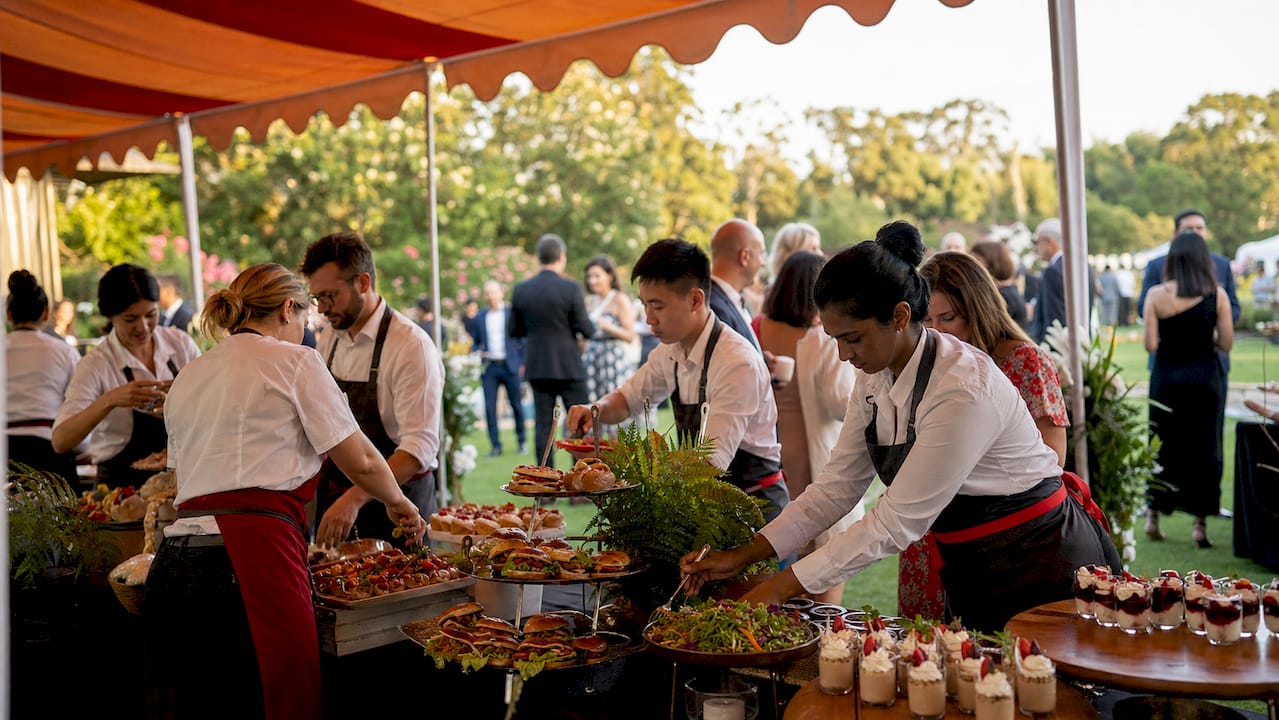
Menu selection starts with the event type. A working lunch for 20 people calls for a different approach than a 150-person all-hands meeting. Drop-off catering covers food and transport only, making it cost-effective for smaller groups. Full-service catering adds staff payroll, equipment rentals, and setup labor, which raises the price but removes the operational burden from your internal team.
- Drop-off catering: Best for groups under 75–100 people, informal settings, and events where internal staff can manage setup.
- Full-service catering: Required for events over 100 attendees, multi-hour programs, or any gathering where food safety and flow need professional oversight.
- Hybrid models: Some providers offer partial staffing, covering setup and breakdown while leaving service to internal teams.
Onsite execution
Onsite activities include arranging food stations, monitoring serving temperatures, replenishing dishes, and managing the pace of service. Full-service catering is critical for temperature control and allergen safety at multi-hour corporate gatherings. A plated meal for a board presentation requires a different setup than a buffet for a team celebration, and the catering team must adapt to both.
Pro Tip: Request a written run-of-show from your catering provider before the event. It should list delivery time, setup completion, service start, and breakdown. Any provider that cannot produce this document is not ready for a corporate event.
How do catering staff roles contribute to smooth event execution?
Trained staff and logistics are the primary drivers of attendee satisfaction at corporate events. The food itself matters, but the people delivering it determine whether the event feels professional or improvised.
A full-service catering team typically includes the following roles:
- Event coordinator: Manages communication between the catering team and the client. Owns the run-of-show and resolves issues in real time.
- Servers: Manage food flow, replenish stations, and respond to guest requests. Their pace directly controls how long the service takes.
- Chefs or food prep staff: Handle final assembly, temperature checks, and any onsite cooking or carving.
- Bartenders: Required for any event with beverages beyond water and coffee. They also monitor consumption and manage service timing.
- Cleanup crew: Begin breakdown only after the event coordinator confirms service is complete. Premature cleanup disrupts the guest experience.
Staff training covers three areas: food safety certification, allergen awareness, and client communication. A server who cannot answer a question about gluten content creates a liability. A coordinator who does not know the event schedule creates delays. Poor staffing communication causes service delays and dissatisfaction at otherwise well-planned events.
Pro Tip: Ask your catering provider how many events their staff work per week. A team that runs three to five corporate events weekly has seen every common failure and knows how to recover quickly.
How is catering logistics managed for staff gatherings?
Logistics is where most corporate catering plans succeed or fail. Planning staff meals for a large gathering requires a structured timeline, a detailed event brief, and a clear contingency plan.
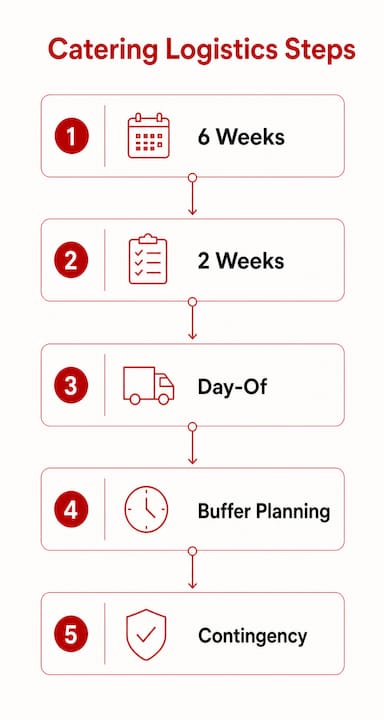
Effective catering planning starts six weeks out, with key confirmations at two weeks and a day-of run-of-show to coordinate timing and vendor expectations. For large events, orders typically require 48–72 hours advance notice. Waiting until the week before creates menu limitations and staffing gaps.
| Planning stage | Timeline | Key action |
|---|---|---|
| Initial planning | 6 weeks out | Confirm headcount estimate, service model, and venue logistics |
| Menu confirmation | 2 weeks out | Finalize menu, dietary restrictions, and delivery window |
| Event brief submission | 1 week out | Send one-page brief with headcount, dietary notes, and contact |
| Final confirmation | 48–72 hours out | Confirm exact headcount and any last-minute changes |
| Day-of coordination | Morning of event | Confirm arrival time, setup access, and run-of-show |
A standardized one-page event brief reduces vendor confusion and cuts front-end negotiation time significantly. The brief should include headcount with buffers, dietary restrictions, loading dock instructions, and a named point of contact.
Buffet quantities require a specific buffer. A 15–20% headcount buffer for buffets prevents food shortages, because guests return for seconds and sharing across tables is limited. For a confirmed 100-person event, order for 115–120.
Contingency planning for weather, no-shows, and late vendors is a non-negotiable part of professional catering logistics. A good provider has a backup vendor list, allergen response protocols, and a clear escalation path if something goes wrong. Review the corporate event catering timeline to build your own planning schedule.
What are the cost considerations in staff gathering catering?
Catering budgets for staff events break down differently depending on the service model. Understanding the full cost picture prevents surprises after the invoice arrives.
- Drop-off pricing covers food, packaging, and delivery. It looks cheaper upfront, but it transfers setup and cleanup labor to your internal team.
- Full-service pricing includes staff payroll, equipment rentals, and breakdown labor. For events over 75–100 attendees, full-service is often more cost-effective because it removes internal labor costs and liability.
- Hidden costs in drop-off catering include the time your staff spends arranging food, managing spills, and cleaning up. That labor has a real cost, even if it does not appear on the catering invoice.
- Menu complexity drives price. A simple sandwich platter costs far less than a multi-course plated meal. Match menu complexity to the event’s purpose, not its prestige.
- Headcount buffers add cost but prevent the far worse outcome of running out of food. Build the buffer into your budget from the start.
Request itemized quotes from any provider. A quote that lists only a total price gives you no ability to control costs or compare options. Theofficelunch provides clear pricing for corporate orders, covering everything from sandwich platters to full event menus, so team leaders can plan without guesswork.
Key Takeaways
Staff gathering catering requires coordinated planning across service model selection, staffing, logistics, and budget to deliver a professional event experience.
| Point | Details |
|---|---|
| Choose the right service model | Drop-off suits groups under 75–100; full-service is more effective for larger or complex events. |
| Plan with a structured timeline | Start planning six weeks out and confirm final headcount 48–72 hours before the event. |
| Use a one-page event brief | A standardized brief reduces vendor confusion and speeds up coordination with your catering team. |
| Buffer your food quantities | Order 15–20% above confirmed headcount for buffets to prevent shortages during service. |
| Account for hidden costs | Drop-off catering transfers setup and cleanup labor to your team, which carries a real cost. |
What I’ve learned about catering that most planners overlook
The biggest mistake I see corporate teams make is treating catering as a food order rather than a service operation. They confirm the menu and assume the rest handles itself. It does not.
The events that run well share one thing: the catering team and the event organizer communicated before the day. Not just an email confirmation, but an actual conversation about the venue layout, the schedule, and what happens if something goes wrong. That conversation is where problems get solved before they become incidents.
The second thing I have noticed is that full-service catering gets dismissed as expensive until someone runs a drop-off event for 120 people and spends the first 30 minutes of their own event arranging food trays. The impact of trained food service staff on event flow is not a luxury. It is a direct input to how your team experiences the day.
Catering also shapes company culture in ways that are easy to underestimate. A well-fed team at a well-run event leaves with a different impression of the organization than one that waited 20 minutes for cold sandwiches. That impression compounds over time.
— Efe
How Theofficelunch handles your staff gathering catering
Corporate catering done well requires a provider that understands both the food and the logistics behind it.

Theofficelunch has served corporate clients across London and Surrey since 2015, delivering fresh sandwich platters and tailored meal options for meetings, team events, and large office gatherings. Every order covers dietary accommodations, correct delivery temperatures, and a clear timeline so your event runs without interruption. The ordering process is built to reduce administrative overhead, not add to it. For team leaders who need reliable office catering in London with consistent quality and timing, Theofficelunch is the direct solution. Contact the team to discuss your next event and get a quote matched to your headcount and budget.
FAQ
What does staff gathering catering involve?
Staff gathering catering involves menu planning, service model selection (drop-off or full-service), dietary accommodation, onsite food management, and logistics coordination tailored to the event size and type.
When should I book catering for a corporate event?
Start planning six weeks out and confirm final details at two weeks. Large events require order confirmation 48–72 hours in advance.
What is the difference between drop-off and full-service catering?
Drop-off covers food and delivery only, while full-service includes trained staff, equipment, setup, and breakdown. Full-service becomes more cost-effective for events over 75–100 attendees.
How much food should I order for a buffet?
Order 15–20% above your confirmed headcount. Guests return for seconds, and a shortage during service is far more disruptive than a small amount of leftover food.
What should a catering event brief include?
A one-page event brief should list the confirmed headcount with buffer, all dietary restrictions, venue access details including loading dock instructions, and a named point of contact for the day.
Recommended
- How to Choose Catering for Company Gatherings – Sandwich platters – Office Lunch – Catering company-Party food
- How Catering Supports Business Celebrations That Work – Sandwich platters – Office Lunch – Catering company-Party food
- Catering Brief for Corporate Events: 2026 Guide – Sandwich platters – Office Lunch – Catering company-Party food
- Large Meeting Catering Delivery Options: A Planner’s Guide – Sandwich platters – Office Lunch – Catering company-Party food